


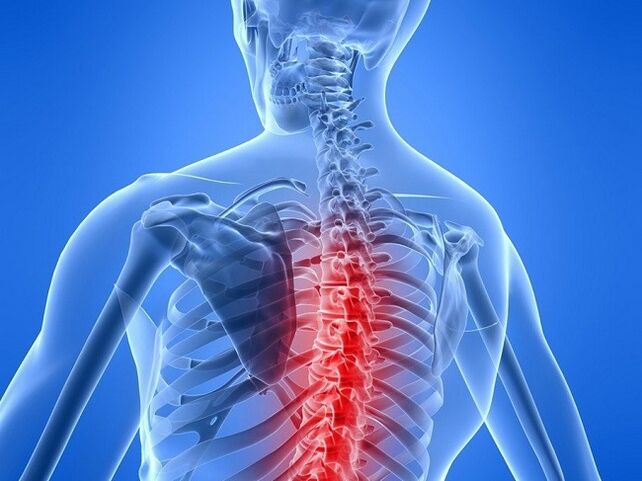
Thoracic osteochondrosis is diagnosed in many people who lead an unhealthy lifestyle.Localization in this part of the spine is less common than in other parts, since the mobility of the vertebrae is limited there and injuries occur extremely rarely.The disease manifests itself as an acute pain syndrome, a characteristic change in posture, and therefore never goes unnoticed.If older people of old age suffered from it, over the past decades the pathology has become noticeably “younger”, that is, it is recorded in people under 50 years old.
Characteristics of the disease
Osteochondrosis of the chest is a bone pathology, the peculiarity of which is the appearance of degenerative changes in the tissues themselves.Due to its location in the middle part of the spine, it poses a serious danger, as it provokes the development of a number of complications.The disease leads to disruption of normal metabolism, a decrease in cartilage elasticity and destruction of the annulus fibrosus.The characteristic features of the pathology are:
- Symptoms do not appear immediately, but as the process develops.
- Degenerative processes are extensive and affect cartilage, muscles, connective tissue and roots.
- The musculoskeletal system and the nervous system are affected.
- The first signs are often confused with diseases of the cardiovascular system or respiratory tract, the clinical picture being similar.
Osteochondrosis occurs equally often in women as in men.Pathology begins with the impact of negative factors on the spinal disc.Gradually it becomes thinner and the space between the segments of the ridge becomes smaller.This causes compression of nerve roots, decreased mobility of the spine, and proliferation of bony processes (osteophytes).This is why patients feel so much pain.
Reasons
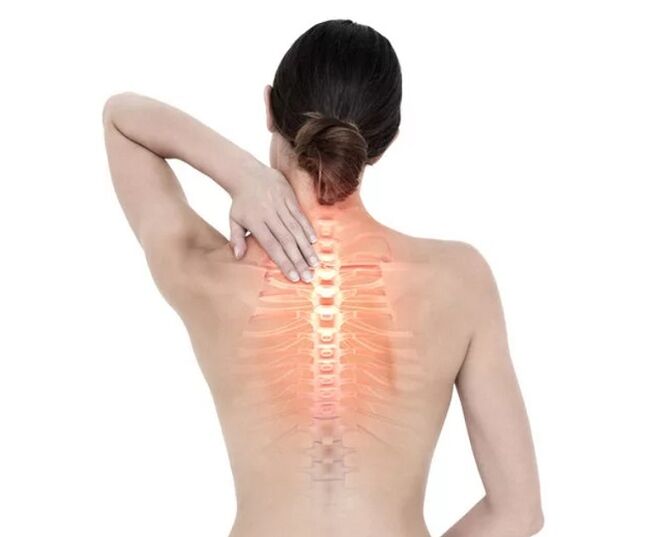
Thoracic chondrosis is less common than other types of pathologies (lumbar cervical), because the vertebrae in this area are inactive.They do not work separately from each other and if physical exercise is being performed, they all turn on at the same time.But there are negative factors that contribute to the development of the disease.Today, experts identify the following main reasons:
- Scoliosis.Curvature of the spine often contributes to the deterioration of the musculoskeletal system as a whole.
- Physical activity.Exhaustive training without the supervision of a trainer or constant shifting of weight with one hand also leads to the appearance of deformations and degeneration of bone tissue.
- Injuries.The appearance of damage in this department provokes the development of a degenerative process.
- Obesity.Excess body weight creates additional stress on the spine, which leads to deterioration of bone tissue nutrition, stagnation of the body and inability to move normally.
- Hormonal imbalances or metabolic disorders.This most often occurs against the background of other diseases, for example, diabetes, adrenal gland pathology, endocrine problems.
- Substance deficiency.The destruction of bone tissue is caused by poor diet, lack of calcium, vitamin D and other healthy components in the diet.As a result, bones become fragile and the entire musculoskeletal system suffers.
- Pregnancy.The process of giving birth to a child requires huge costs for the female body, and as the fetus grows, the burden only increases.Therefore, this period can become a provoking factor in the appearance of ridge problems.
In addition, indirect factors include heavy physical labor or poor mobility during the day, hereditary predisposition, wearing high heels, frequent stress, bad habits and hypothermia.Treatment of osteochondrosis of the thoracic spine almost always begins with determining the cause.This allows you to select control tactics as accurately as possible and achieve excellent effects with drugs.
Stages of development of osteochondrosis
Osteochondrosis of the thoracic spine develops slowly, but due to the lack of pronounced symptoms in the early stages, it often goes unnoticed until the deformation leads to serious complications.The pathology occurs in several stages.
- 1st degree.At this stage, the intervertebral disc is just beginning to lose moisture, gradually deforms, becomes more brittle and becomes covered with cracks.It has virtually no effect on your well-being.The pain appears periodically, but quickly disappears upon rest.
- 2nd degree.The condition of the disc deteriorates, its height decreases more and more.The muscles in the injured area are almost always toned.At this stage, unpleasant sensations and back pain appear, which do not allow you to easily perform your usual work.The spine is no longer as flexible and begins to lose stability, which increases the risk of a hernia.
- 3rd degree.Pain syndrome at this stage only intensifies if measures are not taken in time.The disc fissures enlarge and the nucleus pulposus begins to protrude outward.Doing physical work is difficult;personal care, although preserved, is difficult, especially for the elderly.
- 4th degree.If you do not start treating osteochondrosis in time and in early stages, the discs are damaged, which leads to the overgrowth of connective tissue.Fibrosis causes adjacent segments of the spine to become blocked.The body tries to compensate for what is happening by compensating the bone structure, which is covered in processes resembling the spine.
It is better to start treatment of chondrosis of the thoracic spine as early as possible, this will increase the chances of successful treatment and full recovery of the patient.Therefore, you should not ignore the slightest pain that appears in the chest during exercise or work.Periodic examinations by a doctor for preventive purposes will help prevent the development of the disease.
Symptoms
The insidious nature of the disease lies in the fact that the signs of thoracic chondrosis are in many respects similar to the clinical picture of heart disease.This makes it very difficult to make a diagnosis.Primary symptoms are only observed during physical activities.Pathology is identified by the following manifestations:
- Pain.It can be painful or persistent, felt at the level of the heart, in the pit of the stomach, between the shoulder blades or in the hypochondrium.It disappears as soon as the patient lies down or sits comfortably.It intensifies when you turn, bend or raise your arms, or when you breathe deeply.The degree and intensity of the syndrome may vary.
- Constriction in the chest.May be accompanied by pain in the back, as well as the inability to breathe completely.
- Decreased sensitivity of the limbs.The hands and feet become noticeably colder to the touch and tingling or “goosebumps” appear periodically.
- Increased sweating, fear or panic attack.
- Disruption of the gastrointestinal tract.Patients often suffer from bloating, exacerbation of gastritis, abdominal pain and constipation.
If, in addition to chest pain, intoxication is observed as well as an increased heart rate, you should take a nitroglycerin tablet and call an ambulance.This could be a myocardial infarction attack.In addition to those described above, the characteristic symptoms of osteochondrosis of the thoracic region include dizziness, fainting, swelling of the extremities, decreased sensitivity in the affected area, general malaise and decreased performance.
For reference!In women, the symptoms are more pronounced than in men, especially of a vegetative nature.
Patients often complain of pain in the gastrointestinal tract and heart.In addition to the main symptoms, dorsago (brief painful sensations accompanied by stiffness) or back pain (mild unpleasant symptoms in the spine) may also be observed.They radiate towards the hypochondrium, causing muscle stiffness or a feeling of a lump in the throat, particularly aggravated after a long stay in an uncomfortable position.
Diagnosis
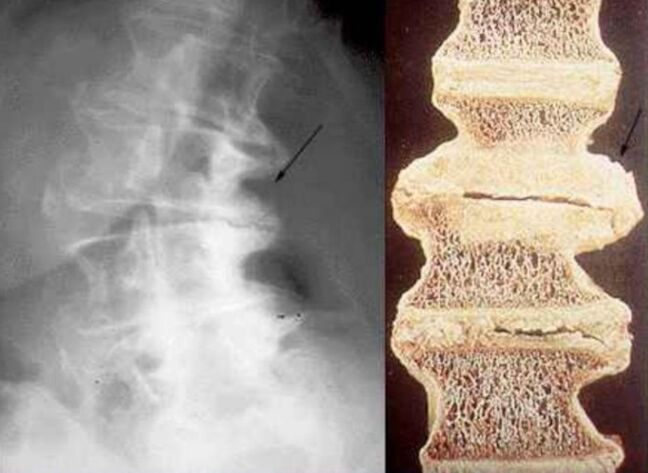
With the appearance of pain in the sternum, patients rush to consult a local doctor.The doctor interviews the patient, performs a visual examination and takes into account his medical history.A precise diagnosis is made after carrying out the tests.In addition to donating blood and urine, a person must undergo the following hardware techniques:
- X-ray of the thoracic spine.
- MRI or CT.
- ECG or treadmill test.
You will also need to consult an orthopedic surgeon and register with this specialist if the diagnosis is confirmed.Women over 40 years old are prescribed additional mammography to exclude diseases of the mammary glands, the symptoms of which are similar to osteochondrosis.

Treatment methods
It is easier to get rid of pathology at the initial stage, when exercises and lifestyle corrections are very effective.If it has already started, control tactics are selected individually by the doctor, taking into account the patient's age, stage of the disease and severity of symptoms.In the acute period, bed rest and minimal activity are recommended, the treatment regimen is gradually adjusted, exercise therapy and massage are added.The impact is achieved comprehensively and usually includes several approaches at once.
Drug therapy
This includes taking medications to relieve pain, muscle spasms, improve the condition of bone tissue, protect it and stimulate regeneration.The complex usually includes the following drugs:
- Anti-inflammatory.
- Muscle relaxers.
- Chondroprotectors.
- B vitamins.
The form of the medicine is determined by the doctor.In the acute period, painkillers are prescribed in the form of injections;as the condition normalizes, ointments and tablets can be used.The effectiveness of treatment directly depends on the correctness of the selected drug and dosage.
Physiotherapeutic treatment
Various procedures will help increase the effect of medications.They are prescribed only when the acute attack has stopped and the patient's condition has generally returned to normal.They have proven themselves well in the treatment of osteochondrosis of the thoracic region:
- Electrophoresis with anesthetics.Improves local blood circulation, increases the effectiveness of the use of the drug due to the action of small current discharges on the tissues of the back.
- Magnetotherapy.The action of magnetic fields helps to improve the condition of soft tissues, reduce swelling and relieve pinched nerve endings.
- Phonophoresis.Involves the delivery of medications using ultrasound waves.Helps relieve pain in the problem area and normalize metabolic processes.
- Acupuncture.By influencing active points located throughout the body with needles with rounded ends, the functioning of the spine improves and blood circulation increases.
- Laser therapy.Helps relieve muscle tension, improves blood and lymph circulation.
The doctor decides which methods to use, in what quantity and for how many days, individually, depending on the patient's condition and the degree of development of the pathology.At the last stage of osteochondrosis, many methods are simply not effective and there is no point in carrying them out.
Massage sessions
A visit to a massage therapist for osteochondrosis is prescribed directly by a doctor.The choice of a specialist should be approached carefully, since experience of working with back pain and qualifications are extremely important.It is best to carry out the procedures in courses, usually 7-10 days.If a pathology appears, it is recommended to sign up for the following types of massages:
- Heal with hands.Involves the use of only oils or cream.Helps relieve spasms, improve the condition, normalize metabolic processes.
- Material.It differs from the first in the use of special devices in the process.The impact on back pain is carried out in doses, which eliminates accidental damage if the technique is followed.
- Place.It is processed manually by artisans by influencing biologically active areas.Helps relieve tension in the back, improves the condition of internal organs.
- Canned.Improves muscle tone, but is somewhat painful.
Among other things, massage perfectly cheers up, relaxes and increases the body's resistance.Therefore, if the patient's condition is not disturbed, he should be included in complex therapy.
Important information!Exercise, massage, acupuncture or any other effects on the diseased area during the acute period are strictly prohibited.It is also not recommended to warm your back or use compresses with infusions as an independent treatment at home.This often leads to rapid progression of the disease and the development of complications.
The arrested acute stage of osteochondrosis goes into remission.During this period, the patient feels good, there are practically no symptoms of the disease, but it is still worth following the doctor's recommendations.A variety of negative factors can cause an exacerbation.These include hypothermia, excessive physical activity, stress, incompetent massage in a painful area, prolonged stay in one position and bad habits.
Possible complications
If osteochondrosis of the thoracic vertebrae is not treated, over time the pathology becomes the cause of serious deformations and degenerative changes in the body.The main ones are:
- Dysfunctions of the cardiovascular system.
- Pinched veins, arteries or vessels in the back.
- Vegetative-vascular dystonia.
- Poor oxygen supply to the brain, fainting and constant headaches.
- Fatigue, exhaustion, inability to perform physical work.
- Intercostal neuralgia.
- Disruption of the digestive system.
It is important to understand the dangers of osteochondrosis in order to start treatment on time and strictly follow all the doctor's recommendations during treatment.
Preventive measures
It is much easier to prevent osteochondrosis than to undergo long-term treatment later.Additionally, tips for staying healthy will also be helpful in maintaining the normal functioning of the entire musculoskeletal system and all vital organs.The following preventive measures will help prevent the development of the disease:
- A balanced diet, reducing sugar and salt in the diet, increasing the amount of vegetables, fruits and fresh herbs.
- Avoid hypothermia, dress for the weather.
- The absence of painful and exhausting physical work or its obligatory alternation with rest.
- Correct your back position when sitting at the computer, reading or doing other work.
- More walks in the fresh air, especially in the hot season.
- Regular exercise and exercise in the morning.
- Timely comprehensive treatment of any inflammatory diseases.
- Organization of sleep hygiene, use of high-quality orthopedic mattresses and pillows.
These simple rules will help maintain spinal health for many years.At the same time, they simply require a person to correct their lifestyle and give up bad habits.
Osteochondrosis of the thoracic region is a serious disease that does not reveal itself at the stage when it is best treated.Its symptoms are nonspecific, which further complicates the diagnostic process.In the absence of correctly selected treatment, this leads to the development of disorders in the functioning of internal organs and serious deformities.